

Lesson
How’d I Get Here?
Explore how an individual develops a harmful relationship with gambling.

Personal Vulnerabilities for Gambling Harm
Many people who experience gambling harm describe a moment of clarity where they truly see the negative consequences that gambling is causing in their lives for the first time.
This can be a very unsettling experience, and leads us to ask ourselves the obvious question....What is happening?!
In this lesson, we’ll explore the different factors that can make us more susceptible to gambling harm, and what we can do about it.
What Causes Gambling Problems?
Researchers have been looking into this question for years. A flagship National Gambling Impact Study Commission looked at all this research and concluded:
“The causes of problem gambling are complex and may emanate from diverse sources: a mix of individual traits; social and economic circumstances; and overall community environment.”
Put simply. There’s no ONE reason someone experiences problem gambling.
A helpful mental framework (used in medical fields) to make sense of this is the Host, Agent, and Environment Model also called the Gambling Harm Pyramid.
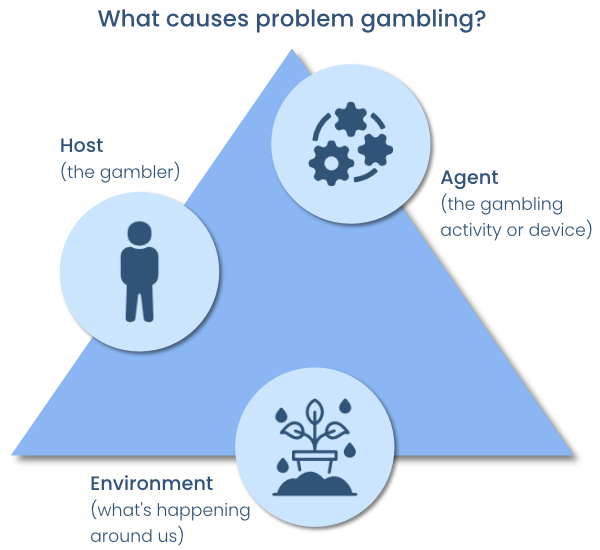
Using this model, we can break down different factors that may contribute to the development of harmful gambling behavior. No single factor can explain why we developed this issue, rather, what is important is the interaction between various contributing factors. Let’s break it down:
The Host
The “Host” is the gambler themselves. Within the host, there are several factors that may make them more protected and more vulnerable to problem development.
Genetics
We inherit our genes and those genes influence our biology. Some people are born with a higher potential to develop addictions based on their biology, including our individual brain makeup or how we’re “wired”. If you have a personal or family history of addiction, your biology may place you at higher risk.
Coping Style
Coping styles are often learned and what was once a helpful coping style, like blocking out painful emotions as a child, can become problematic as an adult. Gambling can be used as a means of coping and for those whose coping style is more about emotional avoidance, gambling can become a vehicle for escape.
Psychological Vulnerabilities
Common psychological vulnerabilities occur whenever we are upset, angry, anxious or going through a difficult life transition. When feeling unbalanced or not our typical emotional self, our ability to regulate our thoughts and behaviors is compromised. Healthy gambling requires a lot of regulation. When our ability to regulate is compromised we are at increased risk for gambling harm.
Personality Traits
Competitive personalities, sensation seekers, and impulsiveness are some of the personality traits that appear to increase the risk of developing a gambling problem.
The Environment
Just like a plant’s soil, nutrients, and sun exposure impacts its growth, environments impact our gambling trajectory. This can mean things like the cultural acceptance of gambling, ease of access such as the ability to make bets on mobile devices, and stressors in your environment.
Research found that during the COVID-19 pandemic more people reported feeling depression, anxiety, boredom…and more people started gambling on mobile platforms. Rates of problem gambling were very high among those gambling online and reporting pandemic related symptoms of anxiety and depression.
Let’s explore how different aspects of our environment can impact our gambling:
Social Culture
Social norms surrounding gambling, such as its portrayal in media or societal attitudes, can shape individuals' perceptions and behaviors, either normalizing or stigmatizing gambling activity.
Political Culture
Government policies, regulations, and public health initiatives regarding gambling can influence the prevalence and acceptance of gambling within a society, impacting access, advertising, and support services.
Gaming Venue
The design and layout of gambling venues, including factors like lighting, music, and proximity of ATMs, can create an environment conducive to prolonged gambling sessions and increased risk-taking behavior.
Family Culture
Family dynamics and attitudes toward gambling, whether it's perceived as harmless entertainment or a serious issue, can significantly influence an individual's gambling habits and their likelihood of seeking help for problematic behavior.
Availability
The accessibility and convenience of gambling opportunities, such as the proximity of casinos or the ease of online gambling, can increase the frequency and intensity of gambling behavior, especially among vulnerable populations.
Environmental Stressors
External stressors like financial difficulties, job insecurity, or relationship problems can exacerbate gambling behavior as individuals may turn to gambling as a coping mechanism or escape from their problems.
The Agent
The final side of our pyramid is the “agent”, that is the gambling activity itself. Some forms of gambling have higher addictive potential than others. However, as we know, ALL gambling is an external activity that impacts our brain’s reward circuit. That means it is possible for ALL forms of gambling to spin out of control. And when we start betting higher and higher amounts, the forces coming from the agent’s corner become stronger.
Speed of Play
Faster-paced games, such as slot machines or online gambling, can lead to quicker losses and heightened arousal, increasing the risk of impulsive and reckless gambling behavior.
Bet Size
Larger bets can not only result in significant financial losses but also intensify the emotional highs and lows associated with gambling, potentially leading to riskier decision-making and chasing losses.
Level of Control
Games that offer a perceived sense of skill or control, like poker or sports betting, may encourage individuals to believe they can influence outcomes, leading to overconfidence and continued play despite negative consequences.
Stimulus Load
Activities with high levels of sensory stimulation, such as flashing lights and loud noises in slot machines, can overwhelm individuals and impair their decision-making abilities, making them more susceptible to impulsive and irrational gambling behavior.
Reinforcement Structure
Games that employ variable reinforcement schedules, such as slot machines or loot boxes, can enhance the allure of gambling by providing intermittent rewards, leading to the development of compulsive behaviors as individuals seek out the next win.
As we journey through Evive, you’ll explore many of these topics in much greater detail. You’ll also learn how to intervene or make changes in your life, in your environment, and your behavior to minimize your vulnerabilities, and protect yourself as much as possible from experiencing gambling harm.
User Spotlight - Meet Joe
Tap here to read about Joe's experience
I wish I could pinpoint the one single reason of "How I got here" so I could have just eliminated that. It took a lot of time, patience, and self-reflection to understand it.
I didn't know it at the time, but I certainly have an addictive personality. For example, I never drank in high school but I tried chewing tobacco. The second I had that first "buzz" I was hooked. A lot of people end up vomiting the first time doing that. I wish the first time I gambled that I had some type of reaction like that. It probably would have been enough to make me stop. But I loved the idea that I could win money and that one day I'd be rich from gambling.
The other aspect was my competitive nature. I played Big Ten football in college so I was always competitive. When I started gambling, I'd get so mad about each and every loss. I couldn't stand it. Little did I know that over time, the anger from losses played a key role in developing an addiction. It started with the fact that I hate losing, it evolved into I hate that I can't control my gambling patterns. In the peak of my active addiction, I honestly didn't even care if I won or lost. I was obsessed with finding out a way to control this. It's like the story of pushing a boulder up an endless hill. Once I accepted that I couldn't do it, everything became easier.
There's certainly several other factors, but those were two of the biggest components.
Find Joe @winning.without.wagers on IG and winning_without_wagers on TikTok

Let's Reflect
What aspects of your own life, environment, and gambling behavior do you feel contributed to the development of problem gambling?

Closing Thought
Becoming more aware of each of these three dimensions is a great step in better understanding your own relationship with gambling, and how to free yourself from the weight of gambling harm.